22 kWp of solar and 69 kWh of storage in Milton Keynes
A five-bedroom house and a garage converted to an office, using 14,400 kWh a year. The question was whether that needed one system or two.
Quick facts
- System size
- 22.14 kWp
- Panels
- 41 × Aiko A540-MCE60Dw, 540 W
- Mounting
- On-roof, Fastensol FTH01 pantile rack
- Inverters
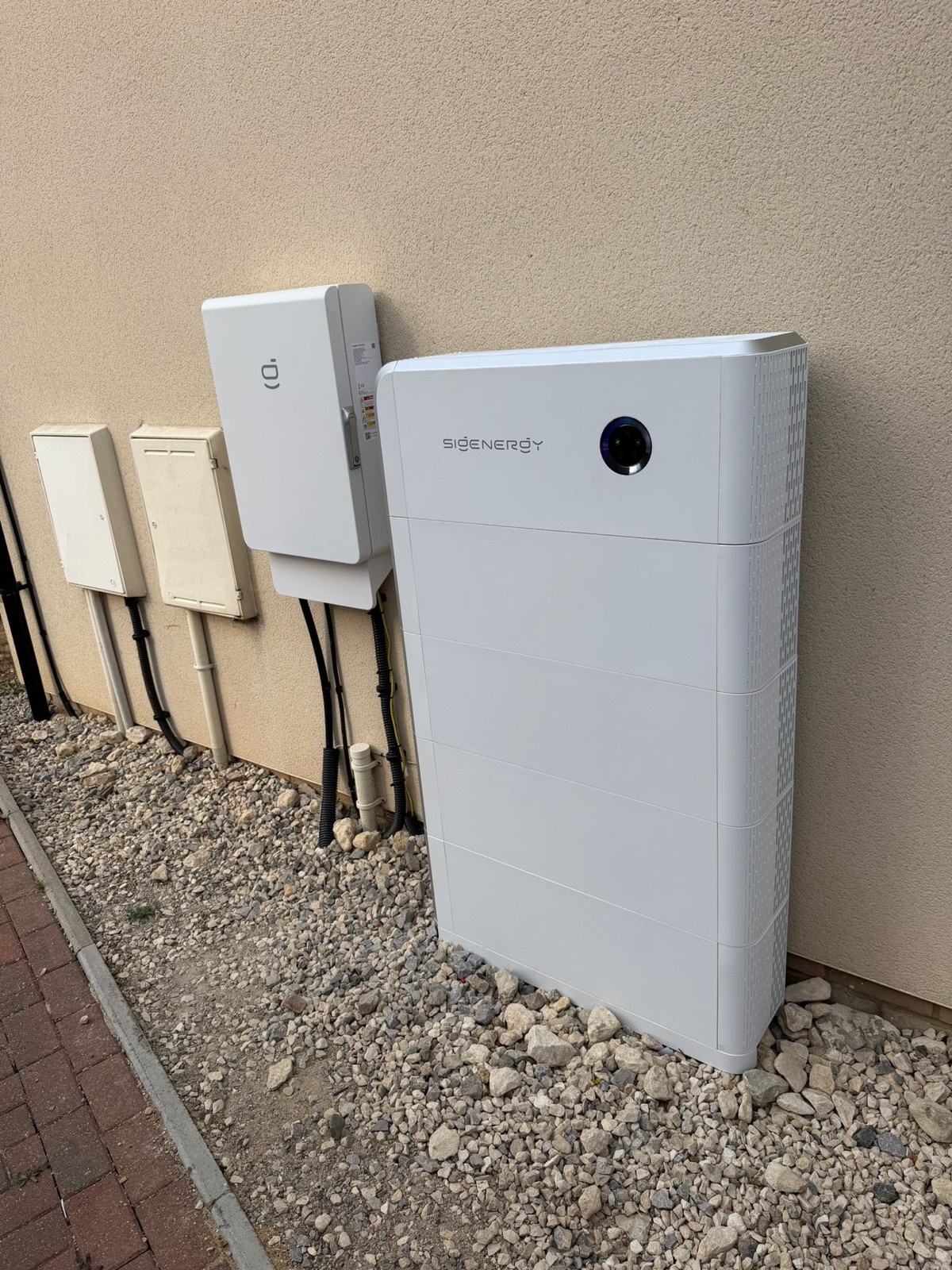
- Sigenergy SigenStor EC 10.0 SP + 6.0 SP — 16 kW total
- Battery
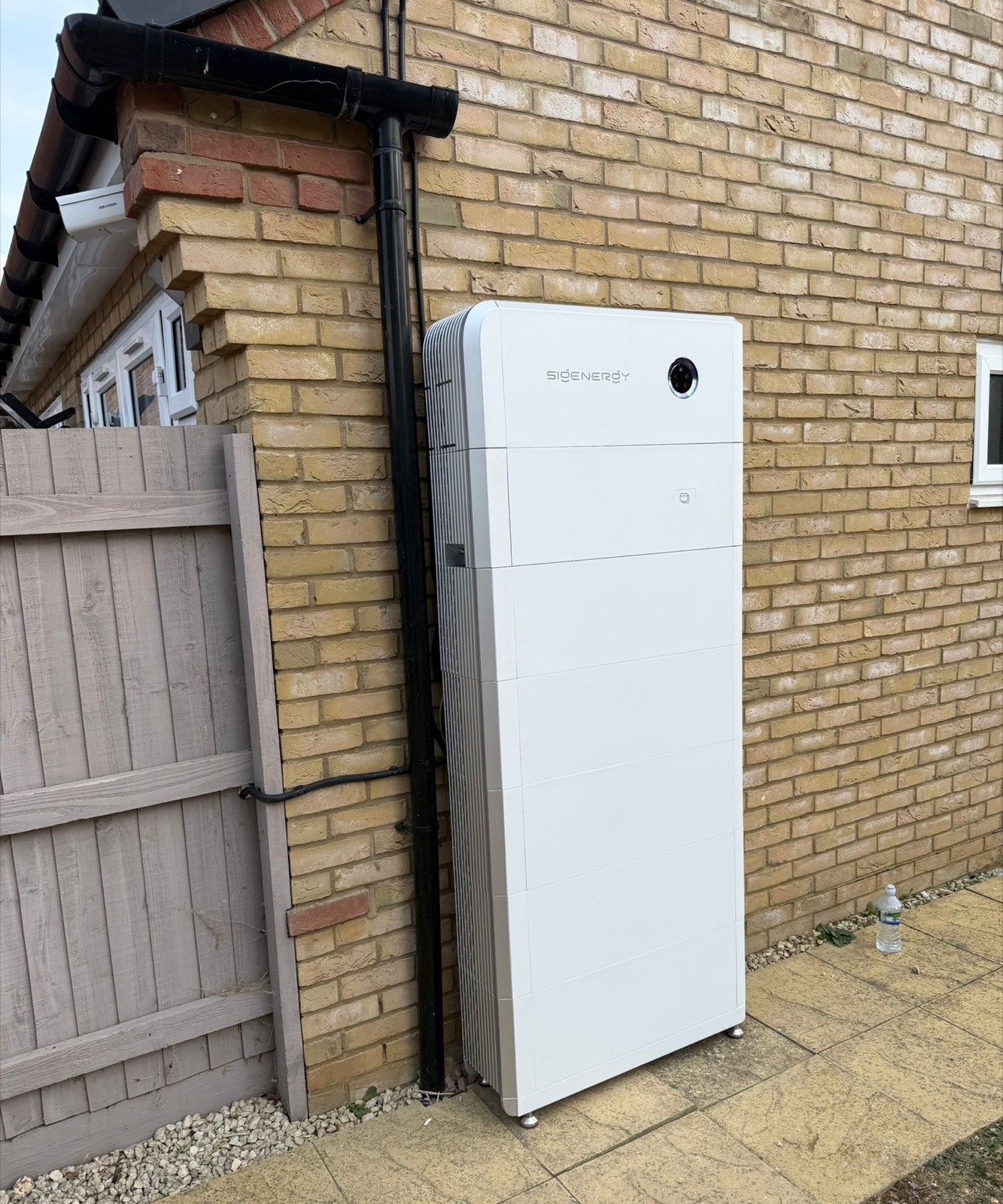
- 4 × SigenStor BAT 6.0 + 5 × BAT 10.0 — 69.28 kWh total, 67.16 kWh usable
- Backup
- Whole-home backup via the Sigenergy Gateway
- EV charger
- Sigenergy DC EV charger
- Roof
- Concrete tiles, 35–60° pitches, four strings at different orientations
- Grid connection
- G99 full application, approved in about five and a half weeks
- Installed
- July 2026, with more battery added in August
- MCS estimated generation
- 13,896 kWh a year
- Estimated savings
- £3,666 a year
- Estimated payback
- about 7 years
Estimated at quote stage based on the customer’s usage and tariff at the time. Actual savings vary.
Why they got in touch
A homeowner in Milton Keynes got in touch about a five-bedroom detached house using around 14,400 kWh a year, with a detached garage that had been converted into an office. Their question was a good one: “would like advice on whether I need two independent systems.”
What we recommended and why
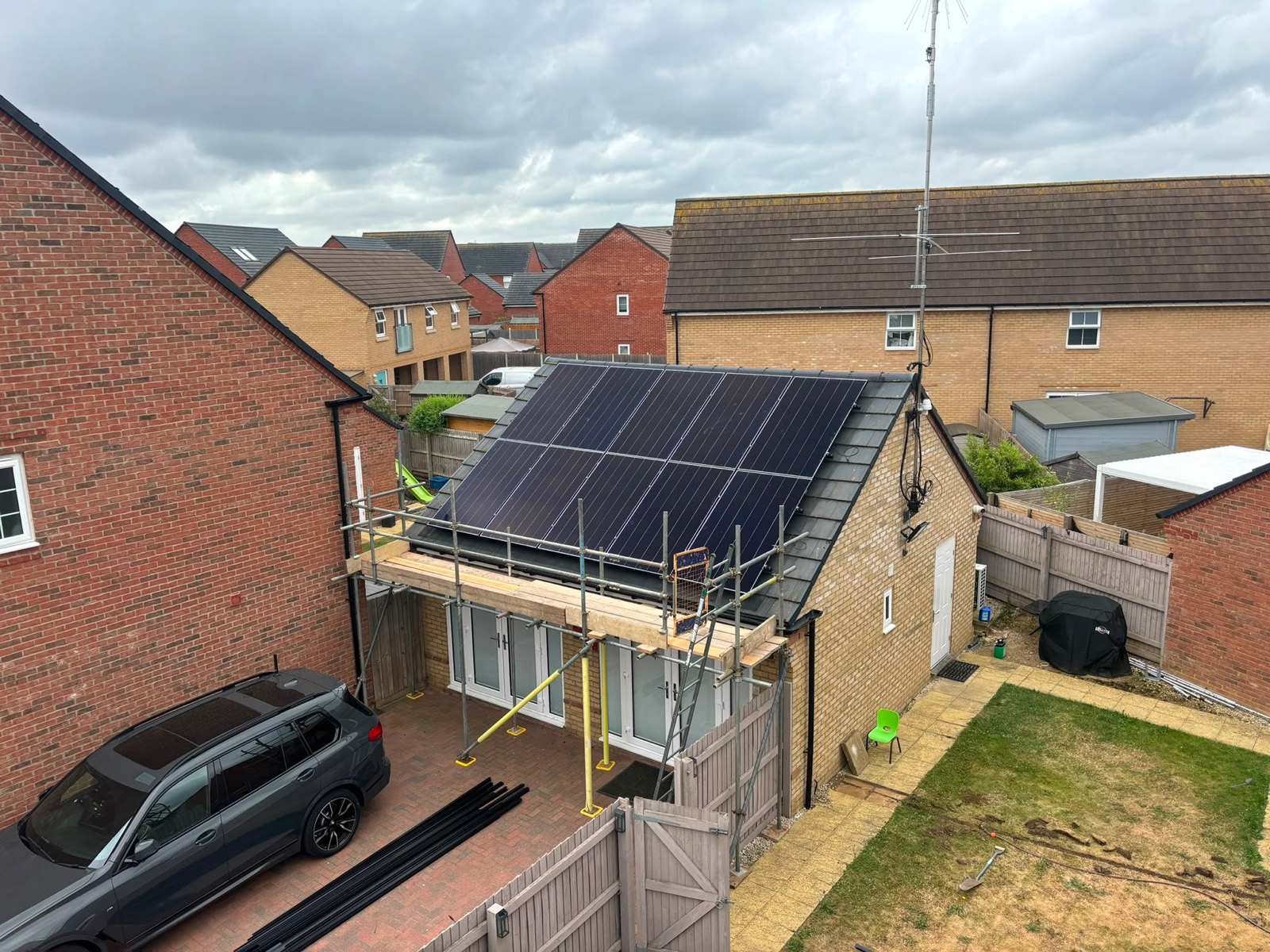
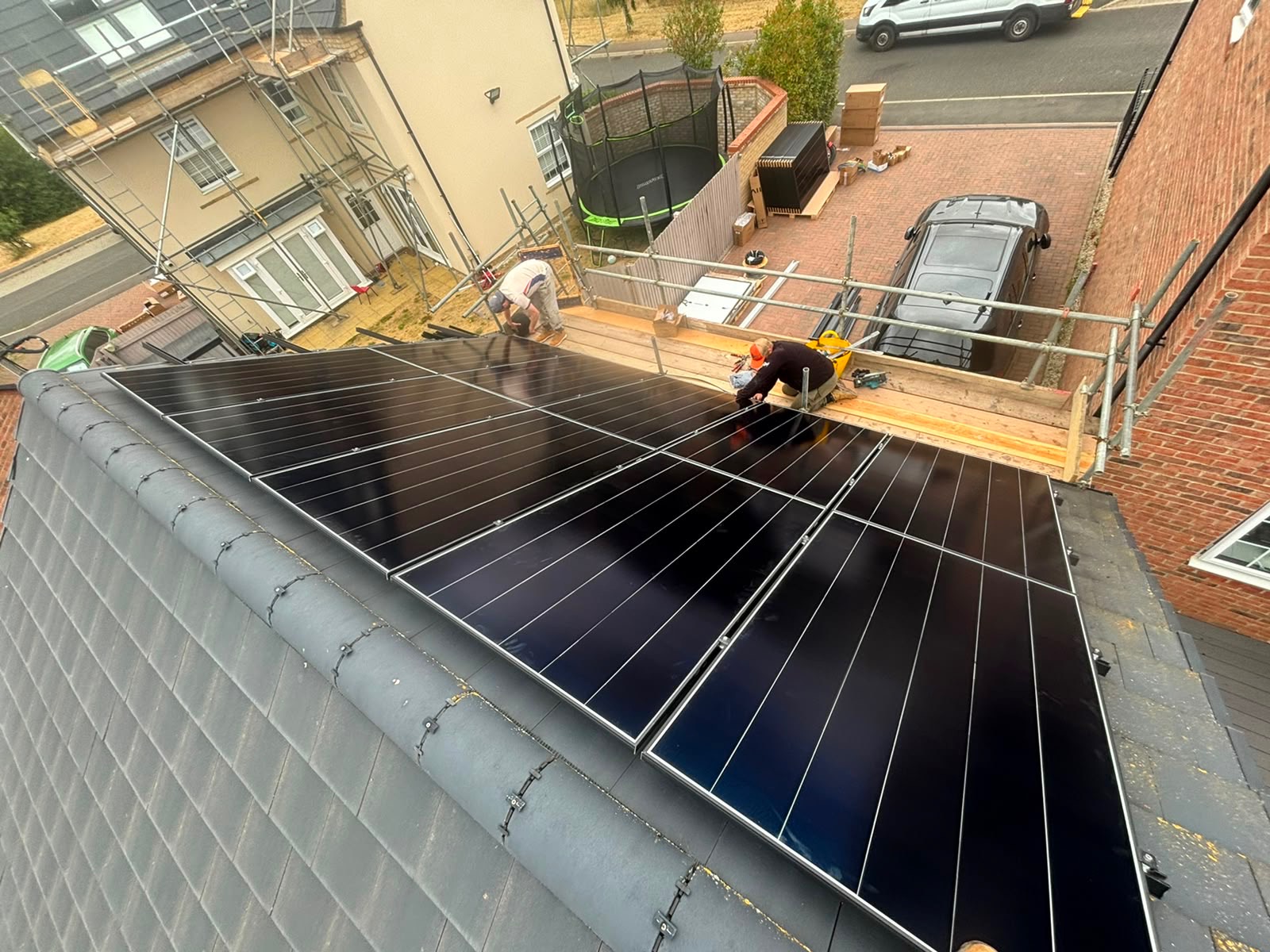
The answer was no. Two systems would have meant two sets of inverters, two grid applications and two things to maintain, for no real benefit. We designed one system across both roofs, with four strings at different orientations feeding a pair of Sigenergy hybrid inverters.
Sigenergy was chosen for three reasons that mattered at this scale: its energy management across multiple strings, the DC EV charging option, and the fact that the battery stack can be extended later. We also compared the design against a competitor's proposal and matched the panel count rather than quietly reducing it.
The design went through several revisions over about six months before anything was ordered.
The install
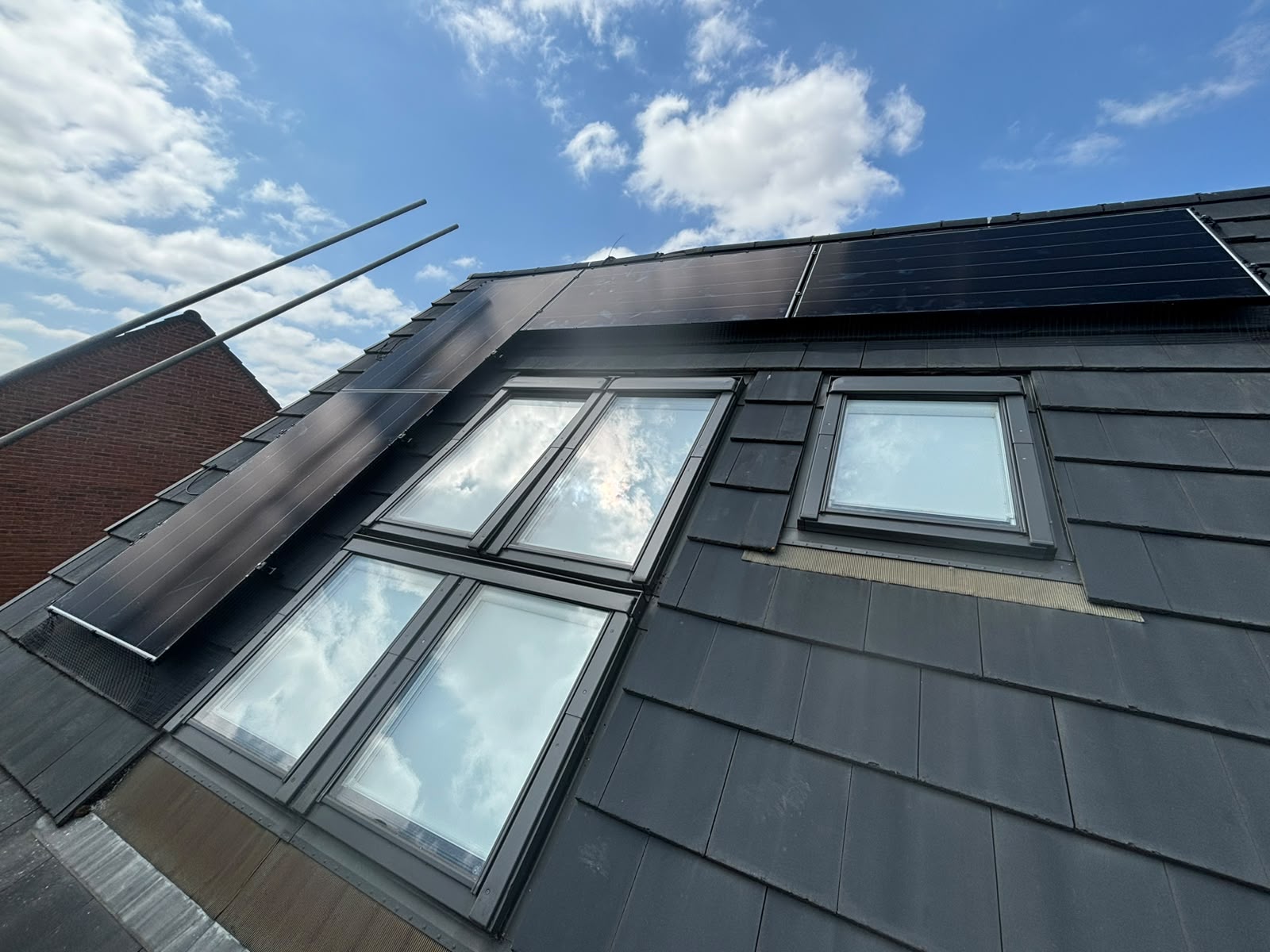
The house roof has Velux windows to work around, and the pitches vary from 35° to 60°, so the layout had to be set out face by face. The G99 was a full application rather than a fast track, submitted on 17 May and approved on 25 June.
The homeowner came back within a month of commissioning to add five more battery modules, taking the stack to 69.28 kWh.
The result
22.14 kWp across several faces, 69 kWh of storage, whole-home backup through the Sigenergy gateway, and DC charging for the car. The MCS certificate puts estimated generation at 13,896 kWh a year.
Photos from the job
Thinking about solar, a battery, or both? Free survey and a fixed written price.
Get a free quoteOr call us on 01908 714446.